Christchurch's economic development agency has secured $114 million in investment for the city in just six months, but a new report reveals a significant gap between these financial wins and the creation of lasting jobs for locals. The council-funded agency, ChristchurchNZ, is already approaching its full-year investment target of $120 million, yet its half-year progress report shows only 69 new long-term jobs have been generated, a fraction of its 500-job annual goal.
The figures, presented to the Christchurch City Council's finance and performance committee, highlight the complex challenge of translating capital investment into direct, sustainable employment. ChristchurchNZ, which receives $16.3 million in ratepayer funding this year, defended the result by noting the ambitious nature of the target, which was sharply increased from 180 in the previous year. The agency also emphasised that job creation from major investments is often not immediate, with a lag of several years before the full employment benefits are realised.
It is also important to distinguish how different types of employment are measured. The 69 roles are categorised as long-term jobs directly linked to business growth and investment. This figure is considered a more telling measure of economic health than the short-term employment often generated by temporary events, which is calculated based on estimated visitor spending.
Tourism and events drive visitor boom
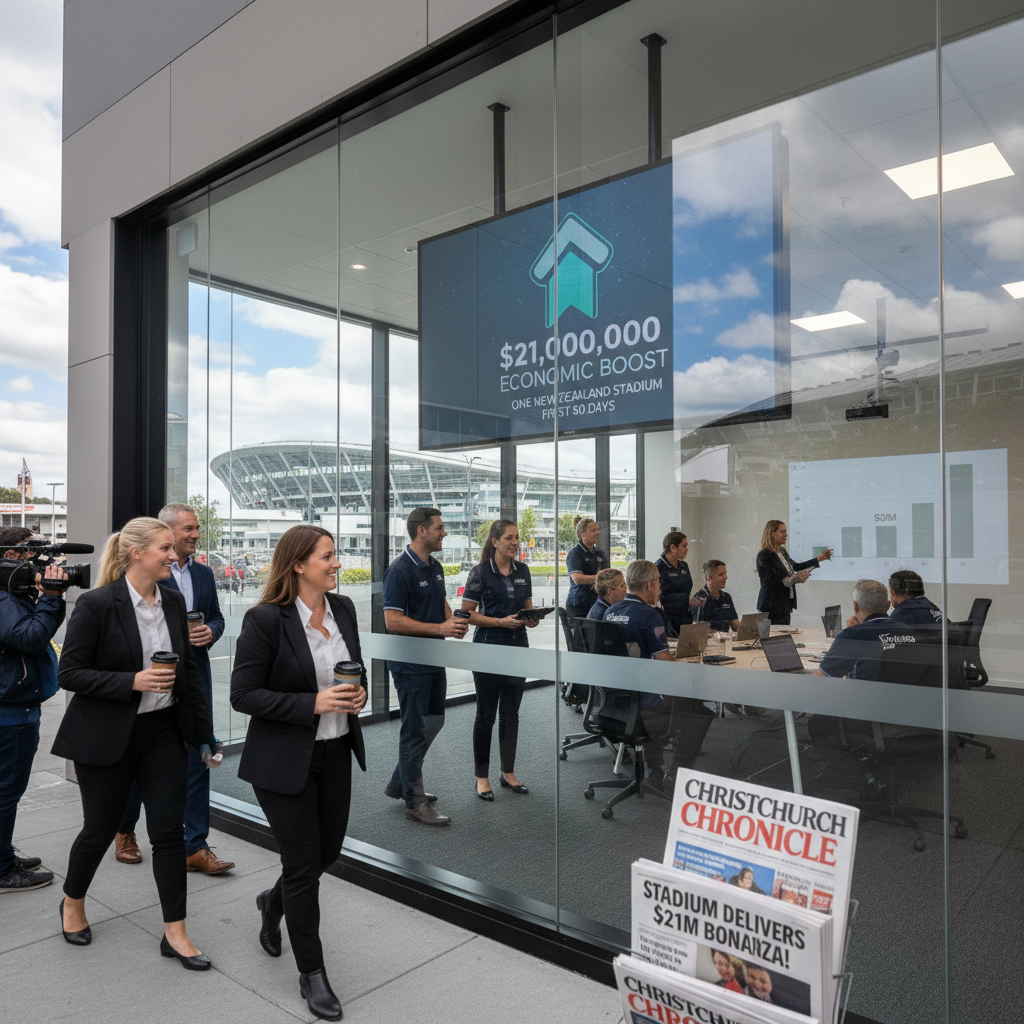
A significant portion of ChristchurchNZ's efforts and successes in the first half of the financial year centred on tourism and major events. The agency's 'On Show' spring campaign, which promoted 12 major events, was a standout success. The campaign is credited with attracting 43,001 visitors to the city, who stayed for a combined 63,987 nights and contributed an estimated $15 million in visitor spending to the local economy.
This tourism success is bolstered by new central government support to attract more visitors from across the Tasman. The focus on the Australian market aligns with broader travel trends, with Christchurch Airport reporting a 7.2% rise in overall passenger numbers to 3.4 million in its latest half-year report. The growth in international travellers was particularly strong, jumping by 15.2%, signalling a robust recovery in post-pandemic travel.
The agency existed to create jobs and grow the city’s wealth, not simply to market Christchurch.

The influx of tourists and event attendees provides a welcome boost, but the economic benefits have not been uniformly distributed across all sectors of the city's economy. While hotels, hospitality venues, and event organisers have clearly profited, other areas are still experiencing financial strain, highlighting a disconnect between visitor spending and broader local prosperity.
Economic indicators show mixed results
Looking at the wider economic landscape, Christchurch and the Canterbury region are outperforming national averages on several key metrics. According to data from Stats NZ, Canterbury’s unemployment rate fell from 4.7% to 3.7% in the December 2025 quarter, while the city's own rate saw a significant drop from 5.7% to 4.5%. Furthermore, GDP growth in both the city and the wider region has outpaced the national figure, suggesting a resilient economic engine.
Despite these positive indicators, local consumer activity remains subdued. Retail spending in Christchurch contracted by 1.5% in the last quarter of 2025. This downturn suggests that while the high-level economic indicators are strong, households and local businesses are still facing financial pressures, and the money from tourists and new investments is not yet circulating widely through the grassroots economy. This mirrors a complex national picture where many, like Aucklanders facing rates hikes, are tightening their belts.
A long-term vision for growth
ChristchurchNZ maintains its strategy is about more than just immediate wins, focusing on a long-term plan for sustainable growth. The agency is targeting key sectors where Christchurch has a strategic advantage. These include aerospace, advanced manufacturing, clean technology, and the food and fibre industries, which encompass innovative projects like the development of climate-resilient Sauvignon Blanc. The city's role as a key gateway to Antarctica is another pillar of this long-term strategy.
Chief executive Ali Adams told councillors that the agency's fundamental purpose was 'to create jobs and grow the city’s wealth', positioning it as a strategic driver of economic change rather than a simple marketing bureau. While it can point to significant achievements in attracting investor leads, increasing airport arrivals, and securing new business events, the challenge remains clear.
The ultimate test for ChristchurchNZ will be its ability to convert these promising signs of momentum into the durable, high-quality jobs that were promised to the city's ratepayers. As the agency moves into the second half of the financial year, all eyes will be on the jobs column to see if the lag effect begins to close the gap on its ambitious target.