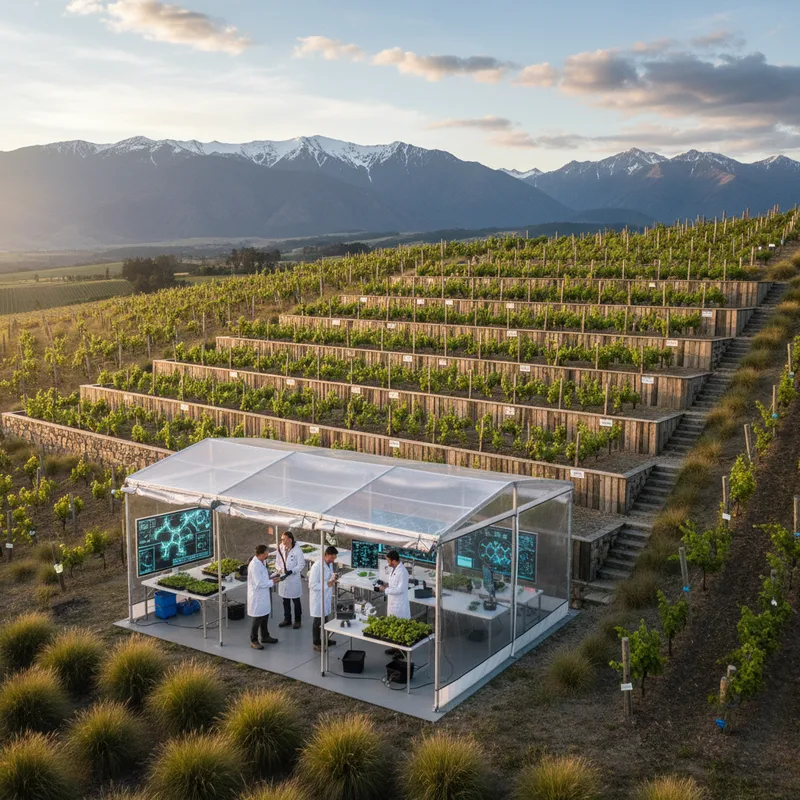
A new Sauvignon Blanc breeding vineyard is on track to reach 10,000 vines this season.
The work sits inside the Sauvignon Blanc 2.0 Programme, a long-term push to develop improved clones for New Zealand’s dominant grape variety. Programme manager Dr Darrell Lizamore says the biggest legacy so far is the infrastructure built behind the scenes.
That platform includes new disease and virus testing, modern genetic fingerprinting, automated screening tools, and data systems designed to make selection faster and cheaper. It is already being used beyond Sauvignon Blanc to support other varieties and industry projects.
What is the sauvignon blanc 2.0 programme building in marlborough?
The breeding vineyard is the most visible piece, but the programme has also assembled a specialist team across genetics, plant physiology, molecular biology, bioinformatics, and viticulture. The goal is to shorten the time between producing new vine material and making confident selection decisions.
Dr Lizamore says measurement matters because subjective scoring and seasonal variation can drown out genuine trait differences. SB2.0 has invested in methods, equipment, training and data systems to tighten up trait measurement for vine health, physical traits and phenology.
The programme is also pitching its tools as a way for growers to lower inputs over time, while coping with climate pressure. University students interested in research pathways can find related resources via UC’s study workshops</a> and the university’s ‘Shape your future’</a> campaign.
How new diagnostics reduce vineyard biosecurity and virus risks
SB2.0 has implemented molecular diagnostics, including PCR and amplicon sequencing, to confirm the absence of phylloxera in the breeding vineyard. The tools detect pathogens from soil samples with high sensitivity.
The programme has also developed in-house protocols for leafroll virus detection to test bud sports identified by growers, known as OddVines, through the year. Growers can report OddVines in Vure, letting them flag suspect vines during normal vineyard work.
Faster diagnostics can reduce the risk of moving infected material through nurseries and into vineyards. That matters as disease pressure shifts, and as growers face tighter expectations on chemical use and costs.
How DNA ‘fingerprinting’ helps tell clones apart
In 2023, the team completed a Sauvignon Blanc reference genome to act as a baseline for identifying genetic change. Since then, it has characterised differences among commercial Sauvignon Blanc clones and about 100 new clones produced in the programme.
That gives researchers a way to identify clones by DNA testing and link genetic changes to the traits they influence. The programme has also used its genome assembly pipeline to generate high-quality references for Chenin Blanc, Chardonnay, Pinot noir and rootstocks.
SB2.0 has developed new methods for DNA extraction and sequencing to cut per-vine costs and detect a wider range of genetic differences. It has also built bioinformatics pipelines to identify clonal variation and map molecular switches controlling trait expression.
The data sits in a database with digital field books, barcode integration and QR-code identifiers. The software runs on national high-performance computing infrastructure to support stable, repeatable workflows.
Those genetic tools are now being used to modernise the national vine collection database and to study how terroir and environmental stress affect trait expression. For context on how climate risk is tracked nationally, NIWA’s <a href="https://niwa.co.nz/climate">climate information outlines observed trends and projections used by primary industries.
Can automated mildew screening cut fungicide use?
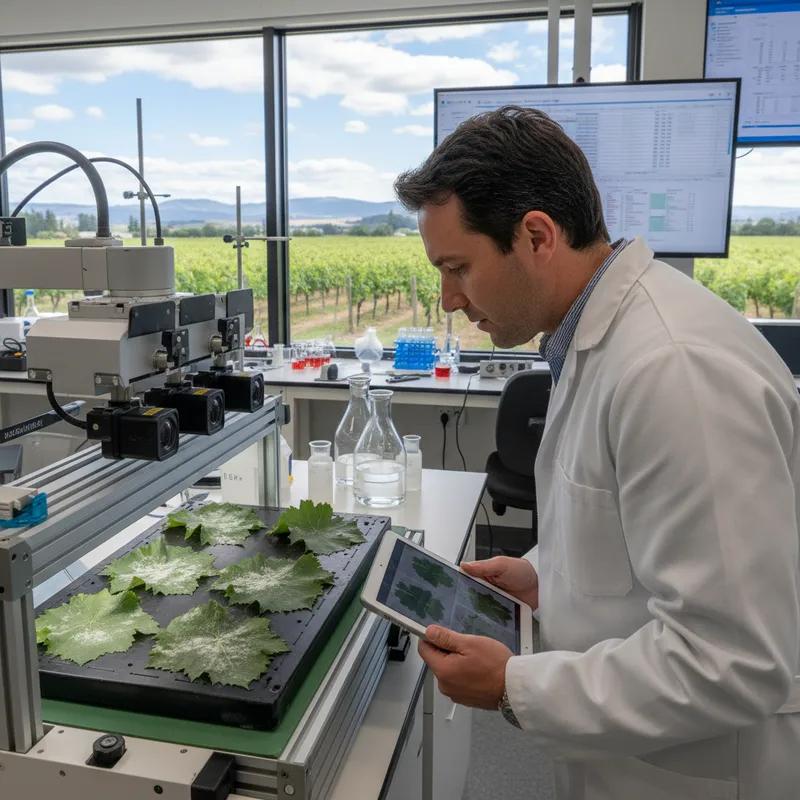
Powdery mildew screening is where SB2.0 has pushed hardest to scale selection. The team standardised inoculum production and refined detached-leaf assays, then paired them with automation.
It is using the Blackbird imaging platform, developed by USDA and Cornell, to digitise mildew growth. AI distinguishes mildew from leaf hairs, turning large image sets into consistent scores in hours rather than weeks.
Dr Lizamore said: "Developing new vines is a long game, but the capability to produce and screen them faster, more reliably, and with less risk will accelerate progress and reduce costs for years to come."
The same resource has been applied to fungicide resistance testing. It is also surveying resistance in local powdery mildew isolates and helping develop rapid diagnostics.
Developing new vines is a long game, but the capability to produce and screen them faster, more reliably, and with less risk will accelerate progress and reduce costs for years to come.
What ‘climate resilience’ traits are being tested next?
Drought and water-use efficiency work has started with a glasshouse pilot of 80 vines, aimed at finding indicators that are both informative and scalable. A collaboration with Bordeaux Sciences Agro has provided tools and experimental designs to measure photosynthesis and transpiration quickly.
For frost tolerance, SB2.0 is combining controlled lab experiments with field exposure to detect bud injury. The programme is adapting robotic imaging approaches and drawing on guidance from Markus Keller at Washington State University.
Getting plants from the lab into the ground has also improved. After four years of sterile plantlet production, SB2.0 can take new clones from the lab, through a nursery, to the breeding vineyard with a survival rate above 97 per cent.
The next practical step is speeding up the path to commercial trials. An experiment in Marlborough this season is comparing propagation strategies, including top-grafting buds from new clones onto established vines.
How gene technology law changes could affect grape breeding
This year the government proposed new legislation to update gene technology definitions. SB2.0’s science team has provided technical expertise to support education and discussion about gene technologies and market access, including engagement with Organic Winegrowers NZ.
The programme has tested steps for non-transgenic editing, including regeneration from grapevine protoplasts. Dr Lizamore says even cautious uptake can still benefit from building capability in regulated research settings.
Internationally, SB2.0 has attracted collaboration, including technical visits to UC Davis, Cornell, USDA, and E. & J. Gallo. It has hosted breeders Valentin Blattner and Peter Cousins to share knowledge on mildew resistance genetics, and plans to host breeders from Geisenheim University and ICVV (Spain) in early 2026.
The tools are already supporting spin-off projects, including fungicide resistance surveys, RNA-based treatments for leafroll virus, and work on Pinot Noir clone diversity. SB2.0’s next phase focuses on selecting mildew tolerance, drought response and frost tolerance before moving top material into pre-commercial trials.
Across the Tasman, other agricultural regions are also selling adaptation as an economic necessity, such as Australia’s Golden Outback promoting shoulder-season travel as weather patterns shift.