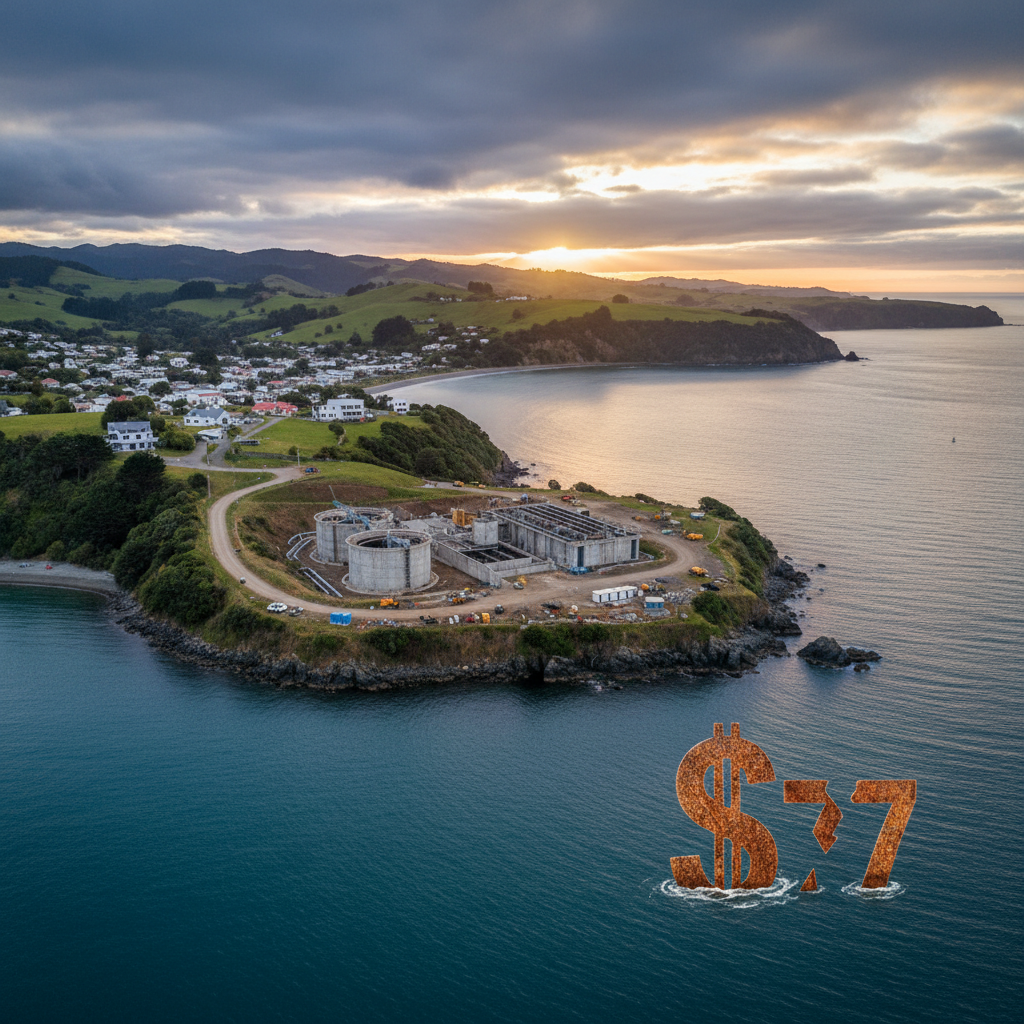
A flagship project to clean up Akaroa Harbour is facing a community backlash after its estimated cost skyrocketed to $175 million, a $77 million increase on its original budget. The Christchurch City Council is now considering a range of scaled-back options, prompting accusations of broken promises and financial mismanagement from frustrated residents.
The Akaroa wastewater treatment scheme, intended to end the discharge of treated wastewater into the harbour, was originally allocated $98 million in the council's Long Term Plan. However, councillors were told in a workshop this week that the project is now expected to cost nearly 80 per cent more, forcing a major rethink.
Community group Friends of Banks Peninsula (FOBP) has slammed the council's handling of the project, arguing the process has been flawed from the beginning and has eroded public trust.
Council scrambles for savings as costs soar
The council's head of Three Waters, Gavin Hutchison, attributed the dramatic cost escalation to a 40 per cent increase in construction costs and the impact of new government regulations. The project is one of the most complex infrastructure undertakings for a small town in New Zealand, involving a new treatment plant, pipelines, pump stations, and land irrigation systems.
The community has lost confidence in the council process given the major blunders that have occurred over the years.</blockquote>
The original plan was to build a new treatment plant on Old Coach Road that would use modern techniques to produce high-quality reclaimed water. This water would be used to irrigate parks and new native forestry plantations at Hammond Point and Robinsons Bay, ending the decades-long practice of discharging waste into the harbour.
Faced with the massive budget blowout, council staff presented five main cost-saving alternatives. Senior council engineer Kylie Hills outlined options that primarily involve scaling back key components like wastewater storage and irrigation capacity. Four of the options centre on land-based disposal, which was the original goal to protect the harbour's water quality and mahinga kai values.
The most expensive of these revised options is estimated at $160 million. It would retain a larger storage capacity of 16,000 cubic metres and keep the treatment plant at its current proposed location. At the lower end, the cost could be reduced to around $136 million by shrinking storage to just 4,000 cubic metres and relocating the treatment plant across Old Coach Road, a move staff said could save about $10 million.
Contentious harbour discharge cheapest option
The cheapest proposal, at an estimated $127 million, involves abandoning the land-disposal goal and instead discharging the treated wastewater into Akaroa Harbour through a new 2.7-kilometre pipeline. However, this option is also the most contentious, and council staff did not recommend it due to the significant environmental and cultural objections.
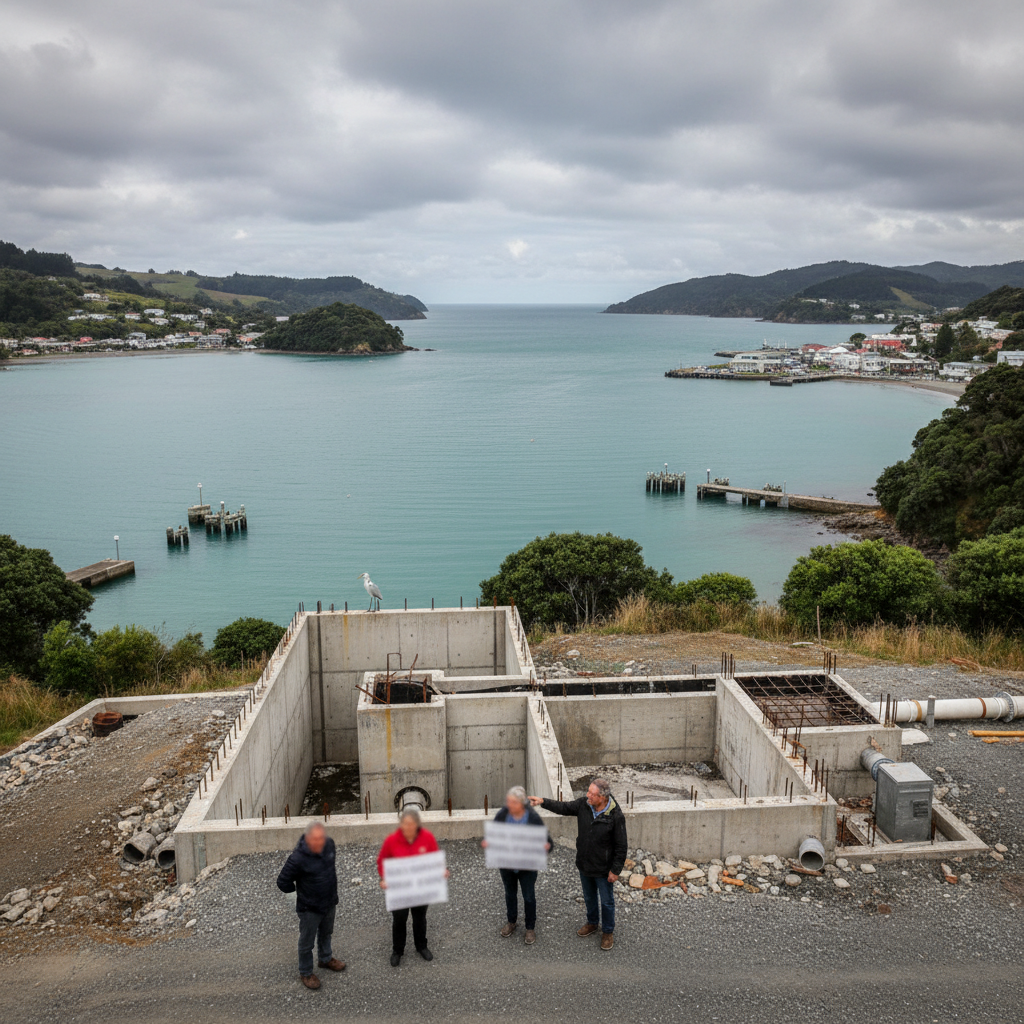
The proposal to discharge into the harbour runs counter to the project's primary objective, which has been supported by mana whenua. Last year, Ōnuku Rūnanga chairperson Rik Tainui described the project as “urgently needed” to protect Akaroa Harbour. The council's project page notes the new system is designed to replace aging plants at Takapūneke and Duvauchelle that currently release treated water into the harbour.
The entire scheme has been subject to a lengthy and complex consenting process through Environment Canterbury (ECan), which involves multiple applications for land use, water discharge, and construction activities. The detailed applications and hearing evidence are publicly available on the ECan website.
Councillors question costs and environmental risks
During the workshop, councillors grilled staff on the financial and environmental implications of the new proposals. Mayor Phil Mauger questioned the value for money, particularly the trade-off between storage capacity and the immense financial outlay. He also queried the relatively small $10 million saving associated with moving the entire treatment plant.
Councillor Aaron Kew raised serious concerns about the council's liability should the land irrigation system fail, asking about the potential for over-irrigation or landslides. “Is there insurance that would cover the cost of it? Would we get our whole $160-odd million back?” he asked. Staff undertook to provide answers to these questions.
Engineers are also exploring other ways to cut costs, with Ms Hills noting one “particularly exciting” idea to lay pipelines within the harbour itself, similar to the system used in Lyttelton Harbour. This could significantly reduce costs and avoid major traffic disruption through the township during construction.
A 'staggering waste' of ratepayer funds
The spiralling costs and compromised environmental outcomes have incensed community advocates like Suky Thompson, who warned the scaled-back land disposal options were a “disaster waiting to happen”. She argued the proposed savings would greatly magnify the environmental risks. Ms Thompson also criticised the project's overall expense, which now appears to be part of a wider trend of large, costly council projects. An ongoing review of the city's $900m northern corridor roading project</a> has also drawn public criticism over its budget and scope. In a separate development, the Auckland busway project faced similar challenges with its budget and land acquisition. She pointed out that the Akaroa scheme serves a small number of residents, making the per-property cost exceptionally high.
“As there are only 1,200 properties being served, this works out at over $141,000 per property,” she said. “At a time when the council is increasing rates by 8% per annum, this is a staggering waste of ratepayer funds.” Rate increases are a sensitive topic across the country, with Hamilton's council recently confirming a lower-than-expected rise after public consultation.
Councillors are expected to formally consider the five options at a meeting next week, facing a difficult decision that balances immense financial pressure against long-standing environmental commitments to the Akaroa community.