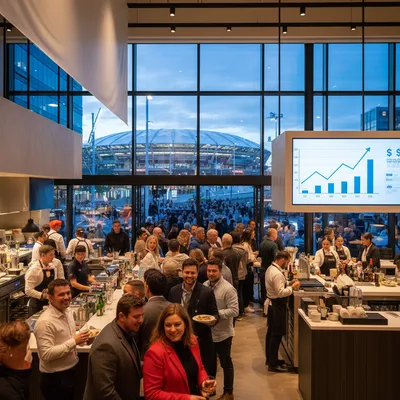
On any given evening in Christchurch, the city centre hums with a renewed energy. The Riverside Market is bustling, central city bars are full, and hotels are nearing capacity, pushing into the mid-90 per cent range during major events. After years defined by recovery and rebuild, Christchurch has rediscovered its confidence, emerging as a test case for a new model of regionally driven growth in New Zealand.
Local leaders and business figures describe the city as a “goldilocks story” – large enough to offer opportunity but small enough to promise a desirable, family-friendly lifestyle free from the gridlock of larger centres. This sentiment is echoed by Business Canterbury chief executive Leanne Watson, who refers to Christchurch as the commercial “lungs” of the South Island, performing a similar economic function to Auckland in the North Island.
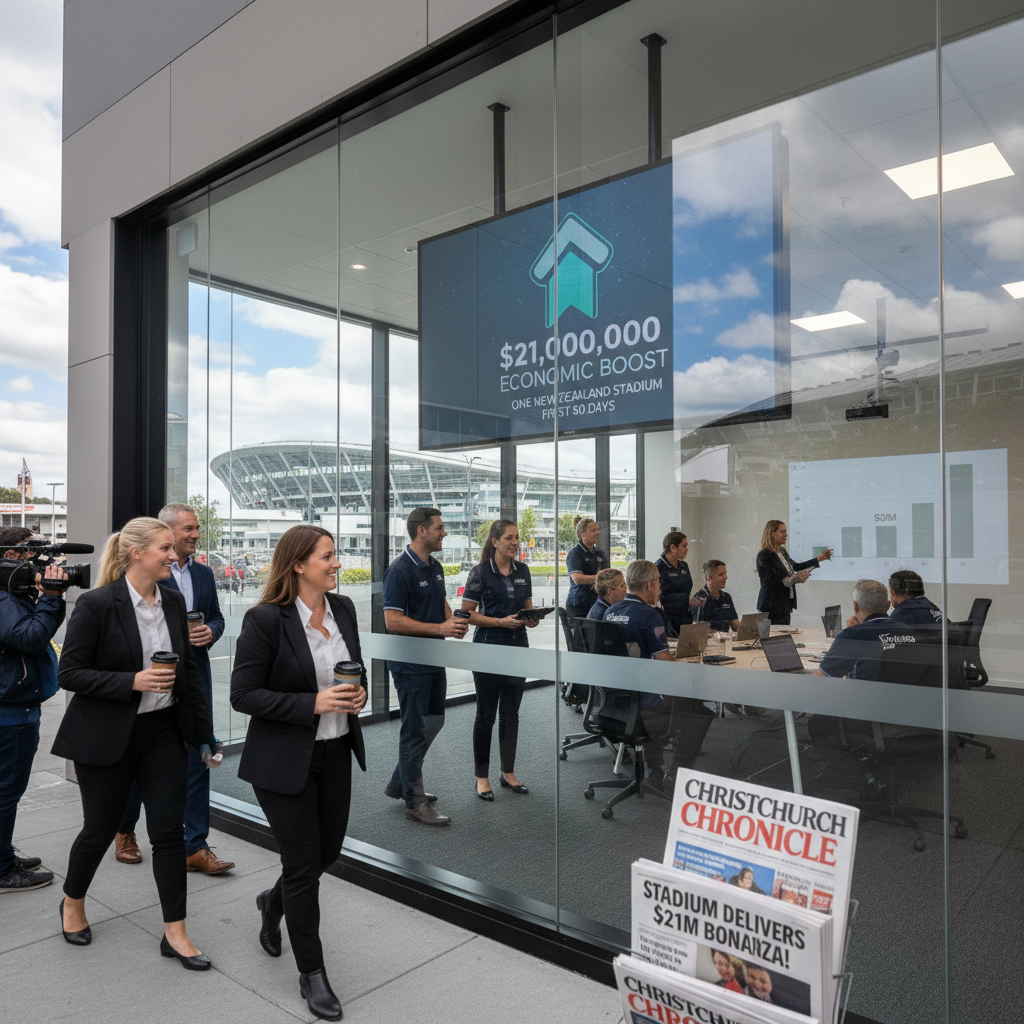
This transformation from a post-earthquake recovery zone to a vibrant economic hub is perhaps best symbolised by the new One NZ Stadium, Te Kaha</a>. The state-of-the-art covered stadium has quickly become more than just a venue for sport; it is a focal point for civic pride and a powerful engine for the local economy.
A symbol of civic confidence
The journey to Te Kaha was a long one. The city’s former rugby league and soccer home, AMI Stadium at Lancaster Park, was irreparably damaged in the February 2011 earthquake and demolished in 2019. After years of debate and planning, the new $683 million stadium rose in its place, funded by a $453 million council loan and a $230 million contribution from the Crown.
Since its official opening in March 2026 and its first major ticketed event, the Super Rugby Pacific’s Super Round, the stadium has become a beacon of the new Christchurch. At a recent "Voices of the Game" leadership forum, Venues Ōtautahi chief executive Caroline Harvie-Teare captured the city's sentiment towards the long-awaited venue.
The stadium’s impact extends far beyond the emotional. Cameron George, chief executive of the One New Zealand Warriors, noted the extraordinary demand, with hundreds of thousands of visitors already passing through its gates. He said it provides a place where people can go to enjoy the “footy” and “have a beer”. This influx drives significant visitor expenditure, filling hotels and restaurants and creating a vibrant atmosphere that radiates throughout the central city.

A blueprint for regional growth
The success of the stadium highlights a growing challenge for Christchurch: its infrastructure is beginning to feel the pressure of its own popularity. The strain on ratepayer-funded facilities during major events that deliver national benefits has brought a simmering debate to the boil. The question of how to fund visitor infrastructure, a topic vigorously prosecuted by Auckland Mayor Wayne Brown, is no longer a theoretical exercise for Christchurch.
As the city grapples with these growing pains, leaders are looking to create a more formalised strategy for sustained success. A major initiative, known as "Canterbury Ambition", is bringing together business leaders, iwi, local authorities, and community organisations to forge a unified regional manifesto for growth. Led by Business Canterbury, the collaboration aims to ensure the region can shape its own destiny, rather than simply reacting to decisions made in Wellington.
The priorities of the Canterbury Ambition are clear: invest in infrastructure and connectivity ahead of demand, protect housing affordability and quality of life as key competitive advantages, and ensure regulatory frameworks support, rather than hinder, innovation. While participants have described the process of aligning multiple councils and stakeholders as akin to “herding wildcats”, the resulting regional vision is a rare and significant achievement in New Zealand’s political landscape. This unified front could provide a model for other regions seeking to enhance their economic clout, similar to how cities like Toronto</a> are seeing shifts in regional demand.
Focus on high-value industries
While the stadium provides a visible anchor, Christchurch’s economic strategy is diversifying into globally relevant, high-value sectors. ChristchurchNZ, the city’s economic development agency, has identified key areas for growth, building on the region's existing strengths and fostering new opportunities.
ChristchurchNZ chief executive Ali Adams outlined a focus on aerospace, with the city already home to Dawn Aerospace and the nearby Tāwhaki National Aerospace Centre serving as a hub for advanced space launches and aviation testing. The region's agricultural strength is being leveraged to grow the bioeconomy, which already accounts for 23 per cent of the local GDP. Other key sectors include clean tech and an emerging health tech industry, which will soon be home to BioOra, a biotech company developing cutting-edge cancer therapies. Attracting top talent to lead these fields is critical, a need recognised by institutions like the University of Canterbury.
This deliberate focus on innovation is what sets the current boom apart from a simple, event-driven sugar rush. The city is creating the conditions for private capital to follow public investment, building a resilient and diverse economic base. Tactix general manager Kate Agnew described the city as “rising like a phoenix”, transforming into what she calls one of the most modern urban environments in the Southern Hemisphere. This forward-looking approach is evident in the city's packed events calendar and commitment to developing future-focused industries.
For decades, New Zealand has sought to lift productivity and diversify its economy. In Christchurch, the framework of how to achieve this is taking shape. By investing in civic infrastructure, attracting talent, fostering innovation, and uniting behind a regional vision, Canterbury is creating a compelling blueprint for national success. As the city continues its remarkable ascent, the rest of the country has good reason to watch closely.