A wave of energy and commerce swept through central Christchurch this weekend, as the city’s new Te Kaha stadium hosted its inaugural Super Rugby Pacific Super Round, injecting millions into the local economy and giving long-suffering businesses a taste of a vibrant future. For many, the packed streets and overflowing venues felt like the dawn of a new era, finally delivered after more than a decade of waiting.
For Dux Central owner Richard Sinke, the record-breaking weekend was the culmination of a 12-year test of patience. After signing his lease in 2015 with the expectation of a stadium opening by 2021, he endured years of construction, delays, and quiet streets. Seeing the city come alive was a profound relief.
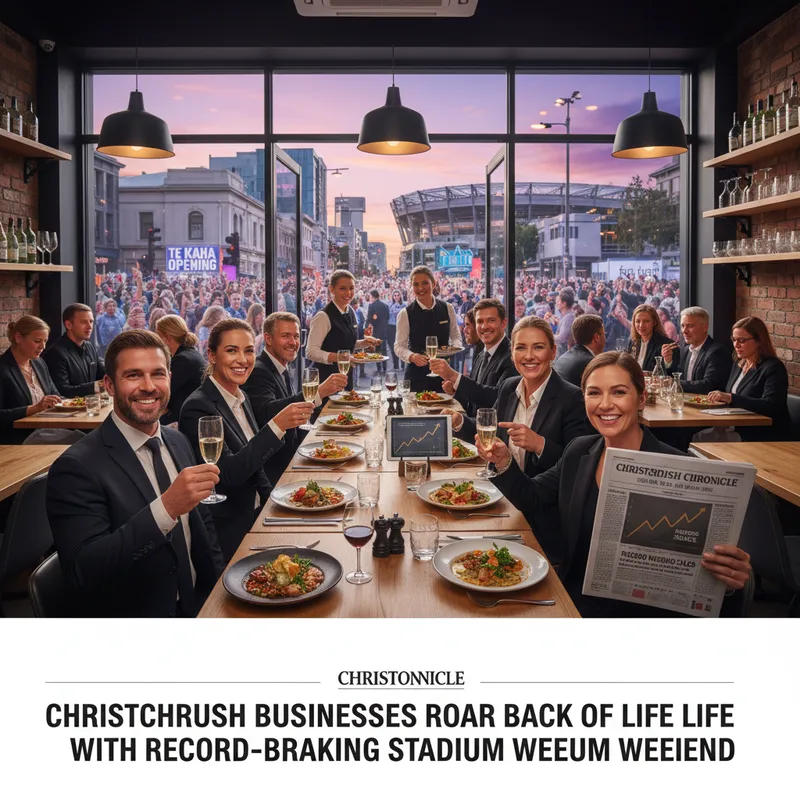
His sentiment was echoed across the city. Down the road at The Rambler, management celebrated their biggest weekend on record, with every private room booked and crowds partying until their 2 am licence each night. “I always knew it was going to be good,” manager Tobias Perry said.
A symbol of recovery
The $683 million One New Zealand Stadium at Te Kaha is more than just a sports venue; it is the most powerful symbol yet of Christchurch’s revitalisation. The city was left without a major stadium after the catastrophic 2011 earthquake led to the demolition of the historic Lancaster Park, a closure that ripped a hole in the city’s sporting and cultural fabric for 15 years.
It’s been a record weekend without a doubt. And walking into the stadium Friday night just blew me away. the vibe, the lighting, the seating. And then to see people spill on to the streets and walk straight into town, it’s just amazing.
The journey to rebuild was long, marked by shifting plans and rising costs. As one of the anchor projects in the city centre’s recovery plan, the stadium known as Te Kaha</a> was designed to restore a critical piece of urban infrastructure and, just as importantly, reconnect the community. Construction began in 2022 and concluded this year, with the official opening on 27 March 2026 heralding a new chapter for Ōtautahi.
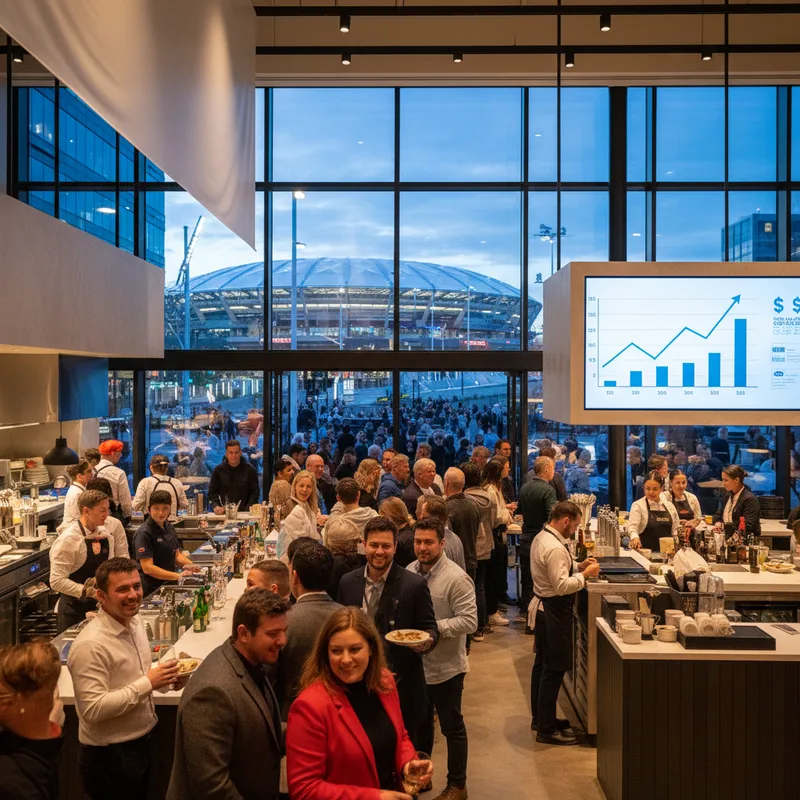
That promise was realised over the weekend as an estimated 14,000 visitors, many from across New Zealand and Australia, descended on the city. The energy was palpable, both inside and outside the state-of-the-art venue. “The Terrace was heaving,” said Craft Embassy co-owner Seth Hamilton. “It’d have to be the busiest school holiday weekend we’ve seen. The weather showed up, and so did the city.”
Record sales and packed streets
The economic impact was immediate and widespread. At The Church Pub on Manchester St, staff poured through an astonishing 50 kegs of beer – approximately 2,500 litres – on Friday alone. Director Andrew Norton was left scrambling on Saturday morning to source enough Steinlager Ultra from his other venues to satisfy demand.
Dux Central juggled 1200 bookings over the weekend and was forced to turn away walk-ins. “We've been waiting 10 years,” operations manager Ross Herrick said, capturing the mood of a hospitality sector finally seeing the light at the end of a very long tunnel. Even specialty venues like Inati, where head chef Simon Levy had prepared 1000 double-fried pie sandwiches, had an “epic” weekend. “For a moment on the strip the other day it felt like I was in Spain,” Levy said. “It feels like everything worked out perfectly.”
The seamless operation extended to the stadium’s new infrastructure, which includes modern payment systems designed to handle large crowds efficiently. This focus on the visitor experience was part of a broader strategy to ensure the venue could compete for major events, with local venues also upgrading their own systems</a> in anticipation of the boom.
A multimillion-dollar future
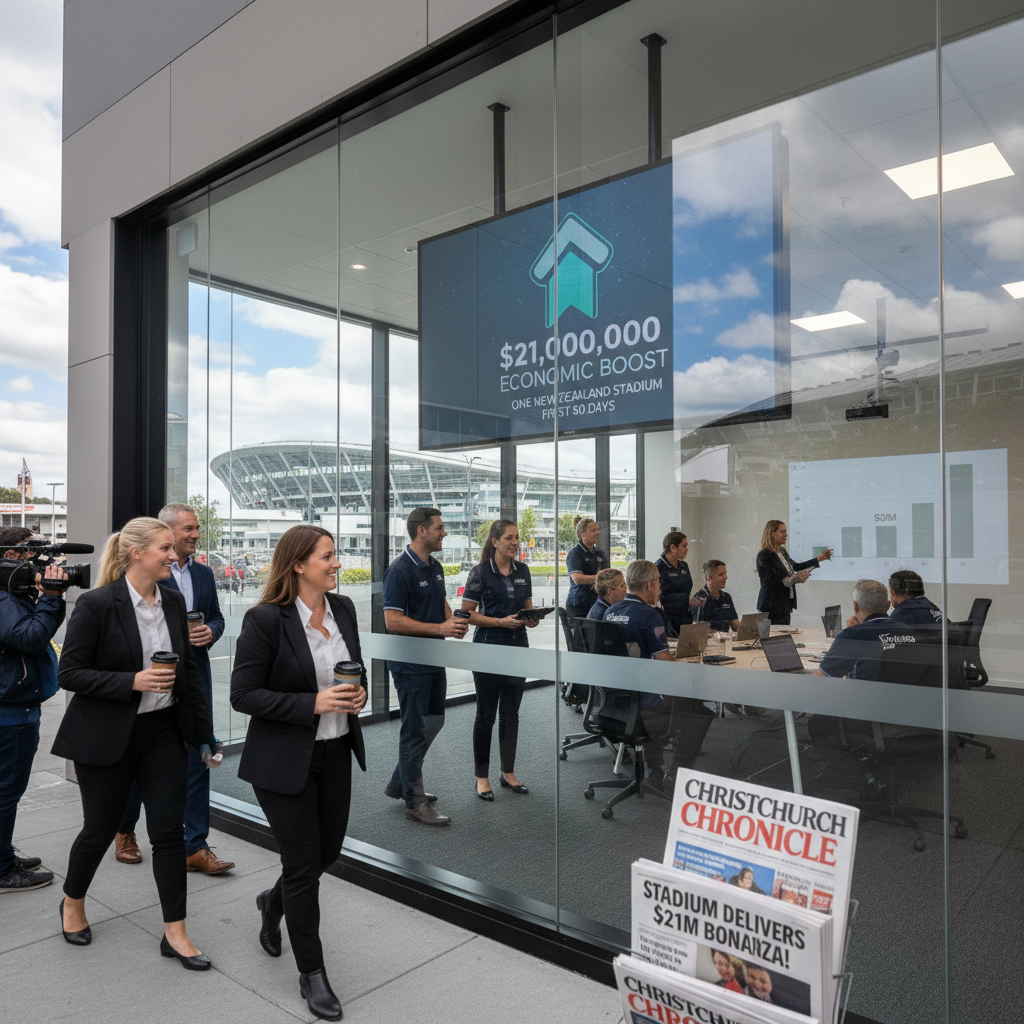
The success of the weekend has solidified hopes that Te Kaha will be a powerful economic engine for the city. According to Super Rugby Pacific chief executive Jack Mesley, the Super Round injected “over $6 million of investment into the local economy.” When combined with the sold-out Supercars event at Ruapuna the previous weekend, ChristchurchNZ is projecting a total visitor spend of $16 million from the two major events. This ambition comes as other centres also vie for hosting rights, with reports that the A-League boss flags third New Zealand team as Christchurch push grows.
Mr Mesley described the weekend as “a pivotal moment for this city” and expressed his desire to see the Super Round become a permanent fixture. While the current arrangement is a one-year deal, he is hopeful of finding Christchurch “a home for many years to come.” This ambition comes as other centres also vie for hosting rights, with reports that the Highlanders are making a pitch to host the event in Dunedin in the future.
For visitors, the city itself was as much a highlight as the rugby. Madelene Hall flew from Brisbane to support the Highlanders, a team she follows in memory of her late father. “Coming to these games makes me feel more connected to him. It’s pretty special,” she said. Her travelling companions, who had come from different parts of Australia, praised the city’s transformation. “I haven’t been to Christchurch since 2017 and wow, has it changed, in a good way.”
The positive atmosphere was noted by authorities, with Superintendent Lane Todd of the NZ Police reporting that punters were well behaved, with no arrests made at the stadium. “The city has just been buzzing in a really good way,” he said. The success of the weekend offers a wealth of opportunities for tourists looking to explore the region, from the city’s reborn centre to the many day trips available in the surrounding Canterbury area.
After years of recovery and rebuilding, the sentiment from the weekend was best summed up by Christchurch Mayor Phil Mauger after he handed the keys of the city to the Crusaders on Friday night.