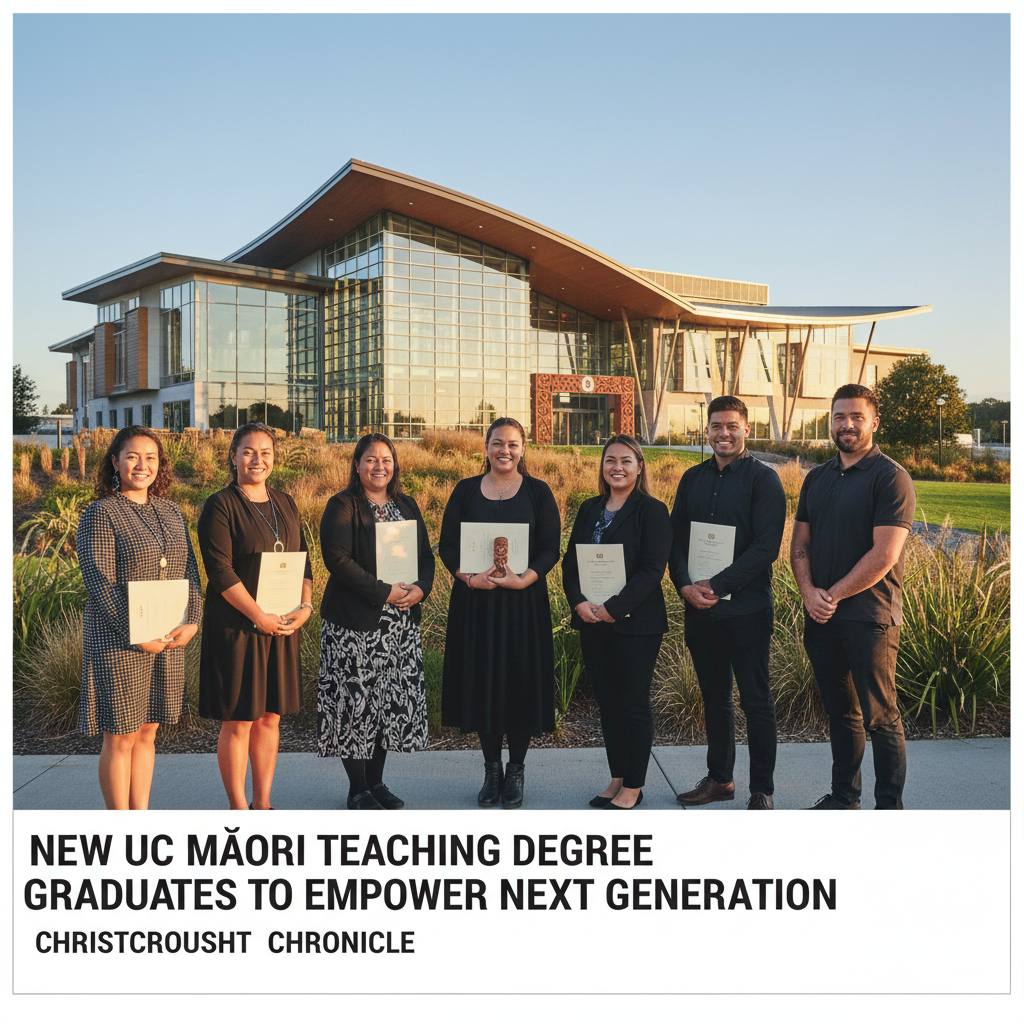
Two Christchurch graduates are poised to enrich the next generation of Māori and Pasifika learners after becoming the first to complete a new University of Canterbury (UC) degree grounded in mātauranga Māori.
Lotu Ausage, 34, and Kenny Brown, 38, were among the first cohort of 18 students to graduate with a Bachelor of Teaching and Learning with an endorsement in mātauranga Māori (Māori knowledge). The new pathway, developed in response to a growing need for qualified teachers in culturally diverse settings, marks a significant step forward for education in Waitaha Canterbury.
Both Ausage and Brown, who returned to study after more than a decade away from formal education, say the programme’s unique approach will pay dividends for young learners. The degree moves beyond traditional Western academic frameworks, embedding Māori worldviews and values into the core of teacher training.
A new approach to teacher training
The innovative degree was created to address a critical shortage of educators equipped to teach in bilingual, Māori-medium, and kaupapa Māori environments. Professor Joce Nuttall, UC’s Executive Dean of Education, said the pathway responds directly to "the increasing need for qualified kaiako (teachers) who are able to teach in bilingual, Māori-medium, and wider kaupapa Māori settings”.
This need is reinforced by a 2024 Ministry of Education report, which found that Māori students in kaupapa Māori schools or Māori units have significantly better educational outcomes. The report showed 50.9% of these students leave school with a Level 3 qualification or university entrance, compared to just 32.1% of Māori students in mainstream English-medium education.
The UC programme’s structure was a major drawcard for its first students. Rather than relying on conventional lectures, the course is built around a wānanga (learning forum) model that fosters collaborative and reciprocal learning. This approach is central to mātauranga Māori, which encompasses the holistic and dynamic body of knowledge and culture passed down by ancestors.
Ausage said the culturally affirming environment gave students the confidence “to be authentically yourself in an environment that isn’t necessarily set up for people like Kenny and myself.”
Personal journeys to reclaim culture
For Lotu Ausage, the degree was a natural extension of her deep community ties and cultural heritage. A fluent Samoan speaker and competent in te reo Māori, she attended the bilingual unit at Te Kōmanawa Rowley School and has remained involved with the school community for the last ten years.
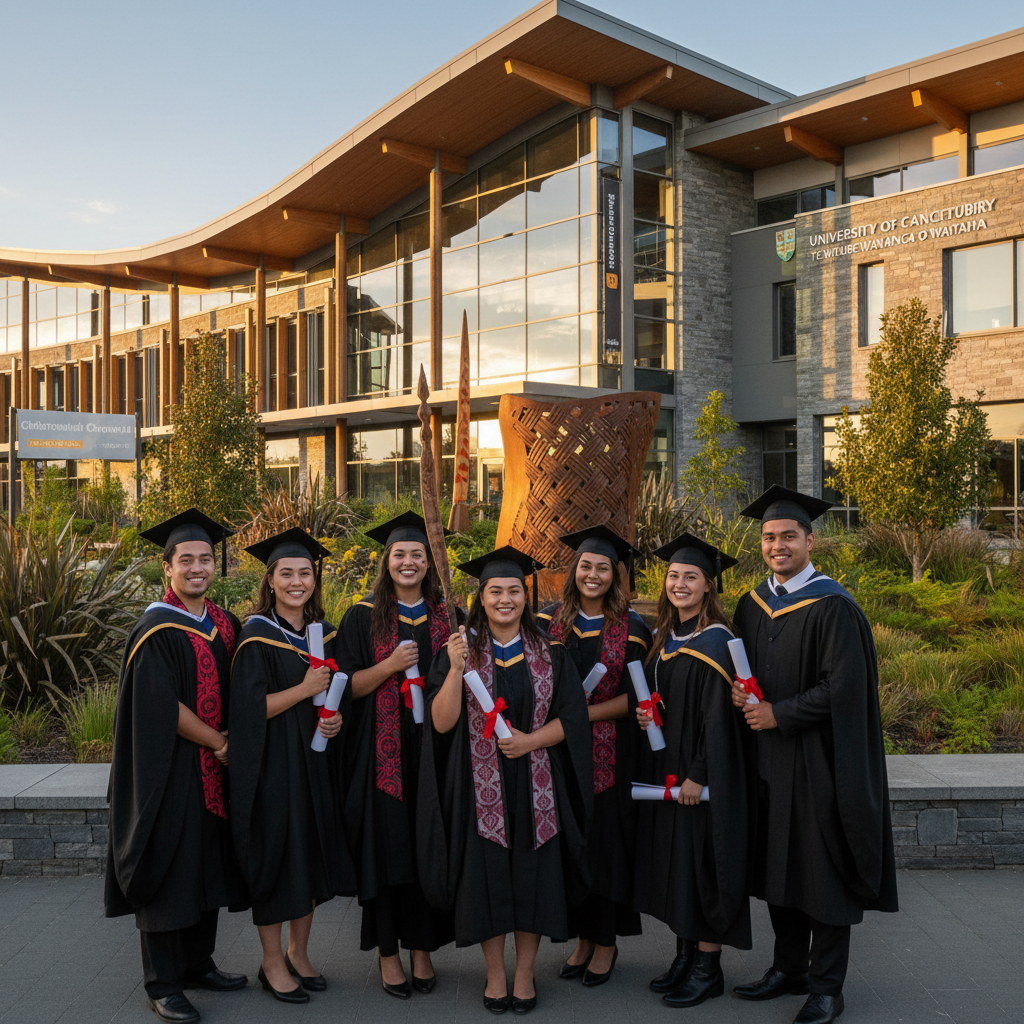
Initially intending to pursue an English-medium teaching qualification, she was drawn to the new pathway after discovering its focus on mātauranga Māori. “I had no idea about Mātauranga Māori, but Samoan and Māori have very similar values and world views, so that was a strong pull for me,” she says. While her plan to return to her old school as a teacher is on hold as she cares for her ill mother, her commitment to culturally-responsive education remains unwavering.
Kenny Brown’s path back to education was inspired by his own children. After attending bilingual units at St Albans and Shirley Boys’ High School, he spent 17 years in the building industry, during which time his fluency in te reo Māori faded. The turning point came when his two daughters transferred from a bilingual unit at Te Waka Unua primary school to Te Kura Kaupapa Māori (TKKM) te Whanau Tahi, a full immersion school in Spreydon.
“I knew that I had to make a change if I was going to fully support my kids,” Brown says. “I couldn’t let them go to a full immersion school and then carry on working and only part-time help them. I had to be in it fully.” After studying te reo for a year, he was encouraged by friends and whānau to enrol in the new teaching degree, a significant undertaking for the father of two.
From classroom to community
The investment has already paid off. This year, Brown began working as the kura taiao (environment) teacher for intermediate students at the very school his daughters attend. He now finds himself in a position to shape the educational experiences of his students, drawing on the inspiration of the teachers who influenced him.
The University of Canterbury, one of New Zealand's most established universities, has a long history of training the nation's leaders, including several former Prime Ministers. This new degree represents another significant contribution, aiming to address systemic inequities in education. Such initiatives are vital for the city as it continues large-scale renewal projects like the review of the Te Kaha stadium development</a>, ensuring cultural foundations are built alongside physical ones. In a similar vein, Jacinda Ardern and Grant Robertson reunited on the Dunedin stage recently, highlighting the importance of public figures engaging with communities.
This focus on community and cultural well-being resonates with other movements across the country, such as the recent launch of the Waikato Queer Arts Festival, which similarly aims to unite and empower its community through shared identity and culture.
I’ve had great examples of how a good teacher can really change your perspective on life but also change .. your experience as a student. If I can be as cool and as inspirational as some of my teachers that I had .. if I'm able to inspire one kid, then I've done my job. But if I inspire 100 kids, then I've excelled at what my purpose is.
A significant milestone
While Ausage proudly walked across the stage at the Christchurch graduation ceremony at Wolfbrook Arena on Thursday, Brown was unable to attend due to a family illness in the North Island. However, he marked the profound achievement in a deeply personal way by receiving a moko kanohi (face tattoo).
“I got it because my father is sick and I wanted him to see moko kanohi return to his whānau in his lifetime,” Brown says. The act symbolises not just a personal achievement, but the revitalisation of cultural identity for his entire family.
The success of these graduates underscores the importance of programmes that champion cultural knowledge, a sentiment echoed by advocates who have previously criticised moves to pause funding for youth-focused initiatives. Investing in pathways like UC's mātauranga Māori degree is seen as a crucial, long-term investment in the future of Aotearoa.
By equipping teachers with the skills and understanding to teach through a Māori lens, the University of Canterbury is helping to ensure that the next generation of learners can see themselves, their culture, and their language reflected in the classroom.